
Colombia is one of the world's leading hydrangea exporters, and most of that flower grows in the highlands of Antioquia. This guide explains, from the grower's side, what happens between the cut and your cooler, so you can plan a program with realistic expectations on quality, timing and cost.
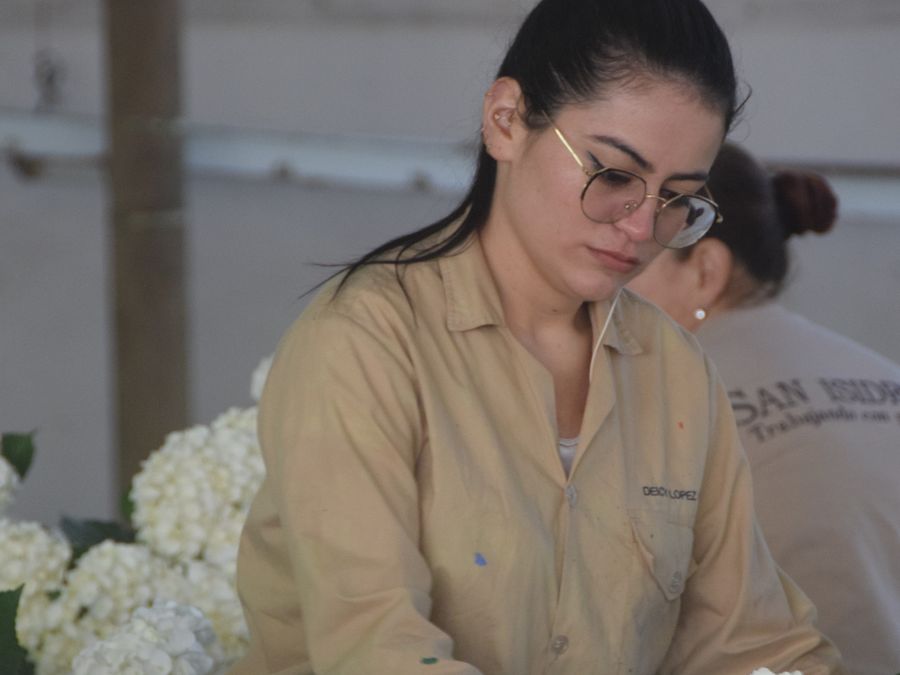
1. Harvest and hydration at the farm
Stems are cut by hand in the morning, when the plant is fully hydrated, and go straight into water. Within hours they are graded by head diameter, from Mini to Jumbo, and tinted stems get their color the same day. Our packing room is on the farm itself, so there is no truck ride between field and box.
2. Grading and packing
Each box carries one grade and one color, with consistent counts, so you can plan inventory by box rather than by stem. Grades run from Mini (12–14 cm heads) through Select (14–16 cm) and Premium (17–20 cm) to Jumbo (21+ cm). Heads are protected and stems hydrated for the trip.
3. Cold chain and freight
Boxes are pre-cooled and move in refrigerated transport to the airport. Air freight is the standard for the United States, Europe and Asia, with typical door-to-door lead times of a few days depending on the route and customs. Sea freight in reefer containers is an option for high-volume, standing programs on routes where transit time allows; it lowers freight cost per stem considerably but needs volume and planning. We will tell you which one fits your market and volumes.
4. What to expect on arrival
Hydrangea is a woody stem that drinks a lot. On arrival, re-cut 2–3 cm at a diagonal, remove any leaves below the water line and hydrate in deep, clean, cool water for several hours before selling or designing. A dehydrated head is not a lost head: a 30–45 minute full soak revives it, because hydrangeas also drink through their petals. With this handling, vase life of 7 to 15 days is normal.
5. Why altitude is your quality insurance
Our farm sits at 2,200 m in La Ceja. Cool nights slow growth, so heads fill out, colors deepen and stems lignify. A woody stem survives the flight better and stands upright under a heavy head. And because the Andean climate barely changes through the year, harvest runs 52 weeks a year: about 50,000 stems per week from 15 hectares, no season gaps.
6. How to start
- Send your market and volumes: destination, grades and colors you move, weekly or per-event quantities.
- We quote per grade and color family with packing counts and the freight options for your route.
- Trial box. Most buyers start with a single air-freight shipment to check quality in their own market before setting a standing program.
Frequently asked questions
How long does it take to import hydrangeas from Colombia?
Air freight is the standard and typically takes a few days door to door depending on route and customs. Sea freight is possible for high-volume programs where transit time allows. Lead times are confirmed per route when we quote.
What is the minimum order for export?
It depends on destination and freight arrangement. Programs usually start with a single air-freight trial box; tell us your market and volumes and we will propose the right starting point.
How are hydrangeas kept fresh during export?
Stems are cut in the morning, hydrated, graded and packed the same day at the farm, pre-cooled and shipped in a cold chain. On arrival, a fresh diagonal cut and deep water restore full turgor.
Which hydrangea grades are available for export?
From Mini (12–14 cm heads) through Select (14–16 cm) and Premium (17–20 cm) to Jumbo (21+ cm), in natural white and 255 color references.
Request a wholesale quote
Tell us your destination, grades and volumes — we answer within one business day, in English or Spanish.
Email ventas@cultivossanisidro.com WhatsApp +57 311 367 6027